The Case of the Digital Envelope Method: An Old Trick in a New World ✉️🌐
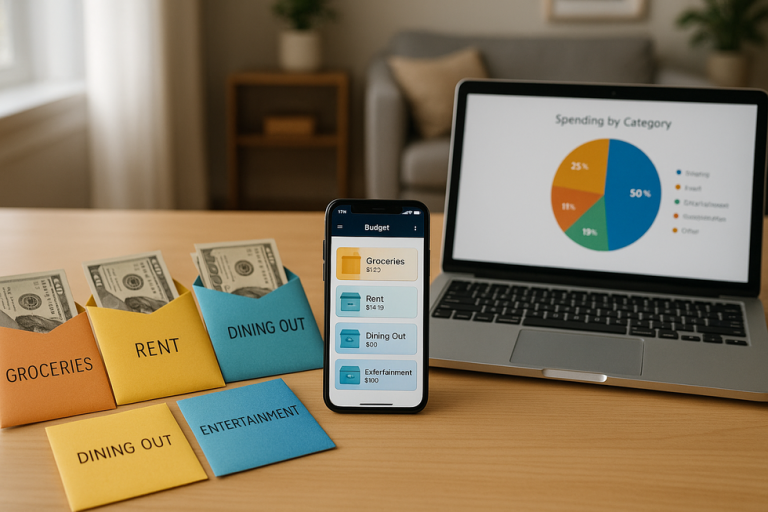
Amid a whirlwind of digital transactions and cashless marketplaces, the notion of stashing paper money into envelopes feels as antiquated as using a quill pen for business correspondences. Yet, the infamous envelope method of budgeting, like the supposedly retired rotary phone, has made a rather peculiar comeback. Is it pure nostalgia or does this tactile tactic hold genuine relevance in today’s pixelated economy? 💳📱
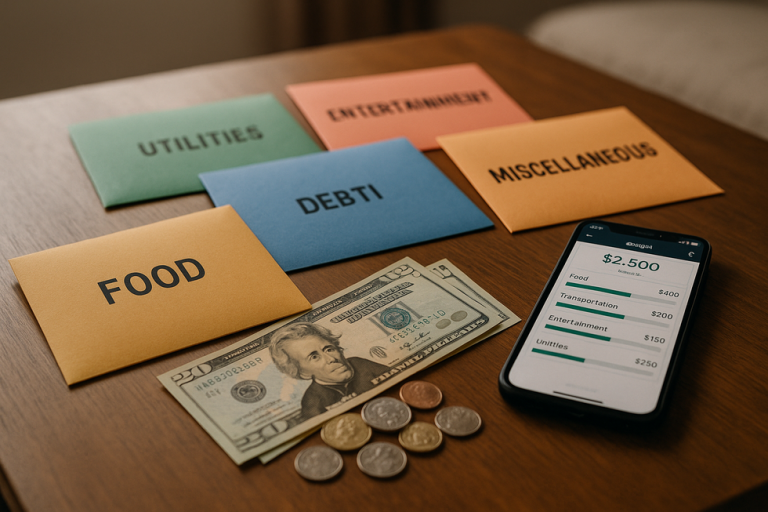
The premise is disarmingly simple: allocate physical cash to various spending categories—groceries, transport, entertainment—by stuffing bills into labeled envelopes at the start of each payment cycle. Once a category’s envelope runs dry, spending in that area halts until funds are replenished. This simplicity is a double-edged sword, as both its strength and its glaring vulnerability in an age teeming with virtual balances and instantaneous swipes.
The Roots and Psychology of Handling Cash
Dating back to times when currency first jingled in purses, the principle of earmarking funds for specific uses has stood the test of time. Popularized in the twentieth century, the modern incarnation of the envelope method arose as a visually straightforward way to instill fiscal discipline. At its core, it taps into behavioral economics’ uncanny ability to make rarefied spendthrifts out of even the most whimsical spenders.
Research in consumer psychology, notably by academics like Drazen Prelec and George Loewenstein, underscores how cash transactions trigger a stronger emotional “ouch” factor than digital alternatives. Swiping a card or tapping ‘Buy Now’ tends to be an exercise in disconnected abstraction, while parting with physical money feels akin to watching sand slip irreversibly through one’s fingers.
Furthermore, the method demands proactive planning. It compels budgeters to seat themselves in earnest deliberation, scrutinizing their income, crafting spending categories, and assigning fixed amounts. This conscious engagement is a pivotal step on the ladder of financial mastery.
Challenges in an Impalpable World
In our increasingly digital domain, applying the rigorous confines of the traditional envelope strategy presents multiple hurdles. Cash usage has plummeted, with some establishments shunning it altogether. Automated payments, subscription models, and online shopping—all of which are intricate transactions—evade management with bundles of physical bills.
- Automated Payments: Direct debits for utilities, rent, or subscriptions neatly sidestep the cash envelope framework.
- E-commerce: Online shopping, a substantial slice of expenditure for many, demands digital payment methods.
- Cash Decline: The ubiquity and convenience of cards and mobile pay make handling substantial cash unwieldy and, to some, unsafe.
- Complex Tracking: Juggling cash envelope expenses alongside digital transactions muddies the waters of budget tracking.
Such factors prompt the question: is the envelope method destined for the dusty shelf, alongside other financial relics? 🏛️
Adaptation or Oblivion: Reinventing the Envelope
The answer appears to be evolution rather than extinction. While strict adherence to physical envelopes might be impractical, the core tenets—categorical segmentation, visual limits, and mindful spending—remain indisputably pertinent. The solution lies in transposing these principles into digital landscapes or blending them with modern modalities.
1. Digital Envelopes and Budget Apps 📱📊
A myriad of personal finance apps such as YNAB, Goodbudget, and Wallet utilize “digital envelopes” to assign income to expense categories virtually. Purchases made with cards or transfers are logged and deducted from corresponding digital envelopes. These platforms offer:
- Bank synchronization for nearly automatic tracking.
- Clear visualization of remaining funds per category.
- Anywhere accessibility.
- Comprehensive reports on spending behaviors.
These applications modernize the concept, preserving the essence of allocation and limitation while adapting to digital financial flows.
2. Multi-Account Strategy 🏦
Some individuals replicate the method using multiple bank accounts or sub-accounts (offered by some digital banks). A primary account handles income and fixed bills, transferring specific sums to other accounts designated for variable spending (food, leisure, clothing). Differentiated debit cards for each account function as “digital envelopes.”
3. Hybrid Approach 💵+💳
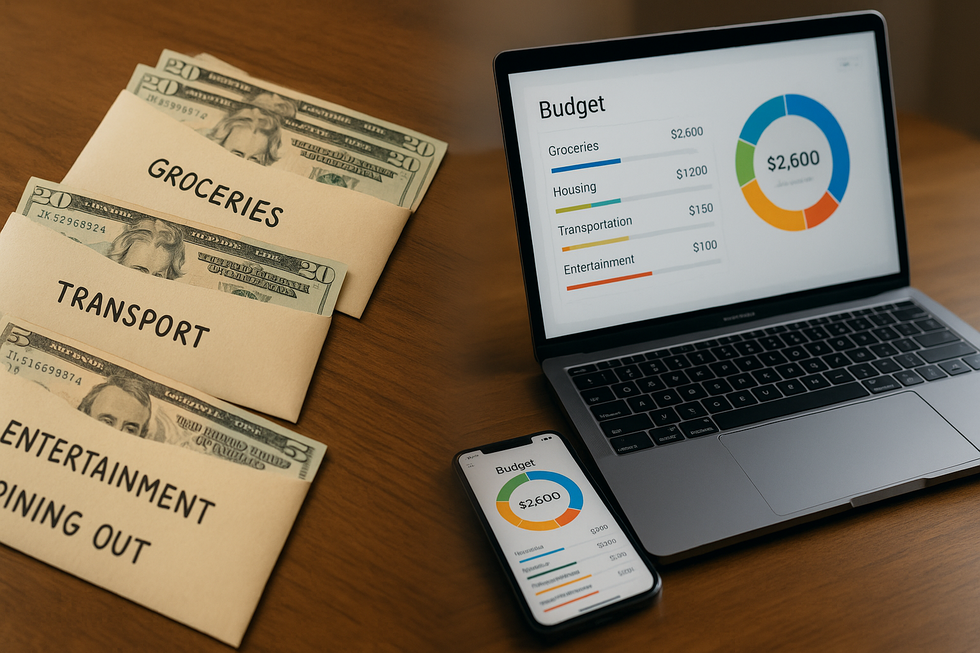
For many, a pragmatic solution is a mix: leveraging online banking and direct debits for fixed, predictable costs like mortgage or utilities, and applying the envelope method physically with cash for fluctuating expense categories prone to excess, such as:
- Groceries.
- Dining and outings.
- Entertainment.
- Miscellaneous personal expenses (“pocket money”).
This bifurcated tactic utilizes cash discipline where most required (discretionary expenses) while reaping the digital convenience elsewhere.
4. The Viral “Cash Stuffing” Movement
The envelope method, rebranded as “cash stuffing” on social media, has regained popularity, especially among younger generations grappling with economic uncertainty. While some forego traditional envelopes in favor of clear plastic folders, the essence remains intact. This phenomenon signals a continued human craving for tangible and visually clear financial management, serving as a counterbalance to digital abstraction.
Is It Still Effective? Updated Pros and Cons
Assessing the method (in pure or adapted forms) today:
Persistent Benefits 👍
- Built-in Discipline: A visible or tangible limit stands as a robust deterrent against impulsive splurges.
- Spending Awareness: Confronts consumers with the reality of their category-wise expenses.
- Simplicity: Easy to grasp and apply in its basic form.
- Debt Prevention: Spending only allocated funds curbs debt accumulation (particularly with an all-cash approach).
- Psychological Control: For many, handling money (or its direct digital representations) confers a greater sense of command.
Modern Disadvantages and Considerations 👎
- Partial Incompatibility: A purely physical method collides with predominant digital payment infrastructures.
- Security Concerns: Handling cash carries risks of theft or loss.
- Inconvenience: Regular cash withdrawal and management are cumbersome, and digital tracking demands diligence.
- Less Rewards: Misses out on credit card incentives, though this might prevent overspending.
- Inflexible Budgets: Adapting mid-cycle to unforeseen expenses is challenging, though an “emergency” envelope can mitigate this.
Verdict: A Timeless Principle Needing Modern Adaptation
The essence of the envelope method, rooted in deliberate allocation and category-determined spending caps, remains a remarkably effective measure for assuming control over personal finances. To dismiss its efficacy in today’s digital age overlooks its inherent adaptability.
The pertinent inquiry isn’t whether the physical method suits everyone, but how its underlying principles can navigate current financial landscapes effectively. The affirmative is resounding. Whether through physical envelopes, digital applications, multi-account strategies, or a hybrid approach, the deliberate practice of planning, apportioning, and capping expenditures stands central to fiscal well-being.
Achieving budgetary success doesn’t necessitate staunch adherence to a singular method. It calls for grasping the foundational logic and artfully adapting it to personal financial dynamics. Far from obsolescence, the digital era has simply provoked the envelope method to evolve. In its contemporary avatars, it maps a coherent pathway toward more mindful and managed financial conduct 💡💰.
About the Author