The Envelope Method: Does It Stand the Test of Time in the Digital Age? ✉️🤔
In a financial landscape dominated by contactless payments, instant transfers, and digital wallets, the idea of managing money by stuffing bills into physical envelopes may seem like a quaint relic from a bygone era. Yet, the envelope method, a venerable budgeting technique, is not only persisting but experiencing a curious rejuvenation. Is it mere nostalgia, or does this tangible tool still offer real value in our increasingly virtual world? 💻💳
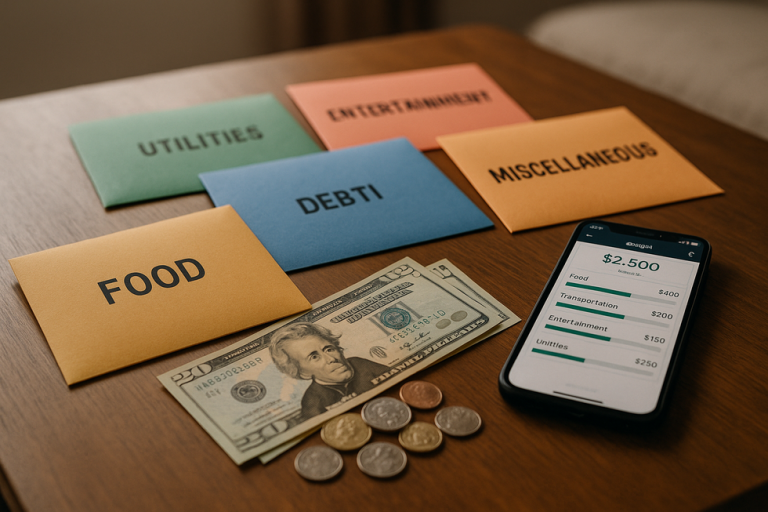
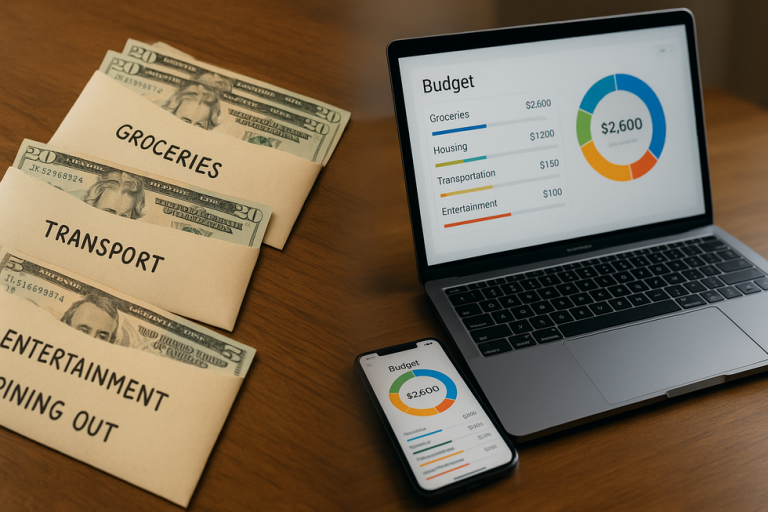
At its core, the method’s premise is deceptively simple: allocate physical cash to different spending categories (food, transportation, leisure, etc.) at the start of each pay period, tucking each sum into a labeled envelope 🏷️. Once an envelope’s money is exhausted, spending in that category must cease until the next cycle. This simplicity is, paradoxically, both its strength and its apparent weakness in the 21st century.
The Roots and Psychology of Cash
Though popularized in the 20th century, the concept of earmarking funds for specific purposes is as old as money itself. The modern envelope method rose to prominence as an intuitive, visual way to enforce discipline in discretionary spending. Its effectiveness hinges on principles of behavioral economics: the “pain of paying.” Spending physical cash triggers pain centers in the brain more acutely than swiping a card or clicking “buy now.” Watching money physically diminish in an envelope creates a sense of limitation far more compelling than checking a digital balance.
Research in financial behavior, such as that conducted by Drazen Prelec and George Loewenstein, suggests that the temporal separation between payment and consumption (typical of credit cards) diminishes the perception of real cost. Cash, on the other hand, demands an immediate, tangible disbursement, reinforcing the connection between spending and resource depletion.
Moreover, the method compels proactive planning. It requires sitting down, analyzing income, defining spending categories, and assigning fixed amounts. This exercise in conscious budgeting is, in itself, a crucial step toward better financial control.
The Challenge of a Less Physical World
The increasing digitalization of finance presents obvious hurdles for the strict application of the traditional envelope method. The use of cash has dramatically dwindled in many economies, with some businesses even refusing it. Automatic bills, recurring subscriptions, and online purchases are the norm—transactions difficult to manage with physical bills.
- Automatic payments: Direct debits for services (utilities, internet, rent) don’t easily fit into the model of physical envelopes.
- Online shopping: E-commerce, a substantial part of spending for many, requires digital payments.
- Reduced cash usage: The convenience and ubiquity of cards and mobile payments make withdrawing and handling large cash amounts less practical and, for some, unsafe.
- Complex tracking: Combining envelope cash spending with digital expenses can complicate overall budget tracking.
These factors have led many to question whether the method is simply incompatible with modern life. Is it destined to become a financial relic? 🏛️
Adaptation or Extinction: The Envelope Reimagined
The answer seems to be adaptation. While exclusive use of physical envelopes might be unfeasible for many, the core principles of the method—segmentation, visual limits, and conscious spending—remain profoundly relevant. The key lies in translating these principles into the digital environment or adopting a hybrid approach.
1. Virtual Envelopes and Budget Apps 📱📊
Numerous personal finance apps (like YNAB, Goodbudget, Wallet by BudgetBakers, among others) explicitly rely on the concept of “virtual envelopes.” They allow you to digitally allocate income to different spending categories. When making a purchase with a card or transfer, the expense is logged and deducted from the corresponding digital “envelope.” These tools offer:
- Synchronization with bank accounts for near-automatic tracking.
- Clear visualization of remaining funds in each category.
- Accessibility from anywhere.
- Detailed reports on spending patterns.
These apps modernize the method, maintaining its essence of allocation and limit while adapting to digital money flows.
2. Multi-Account Strategy 🏦
Some people replicate the method using multiple bank accounts or subaccounts (offered by some digital banks). One can have a primary account for income and fixed bills, then transfer specific amounts to other accounts designated for variable expenses (food, leisure, clothing). Using a different debit card for each account acts as a “digital envelope.”
3. The Hybrid Approach 💵+💳
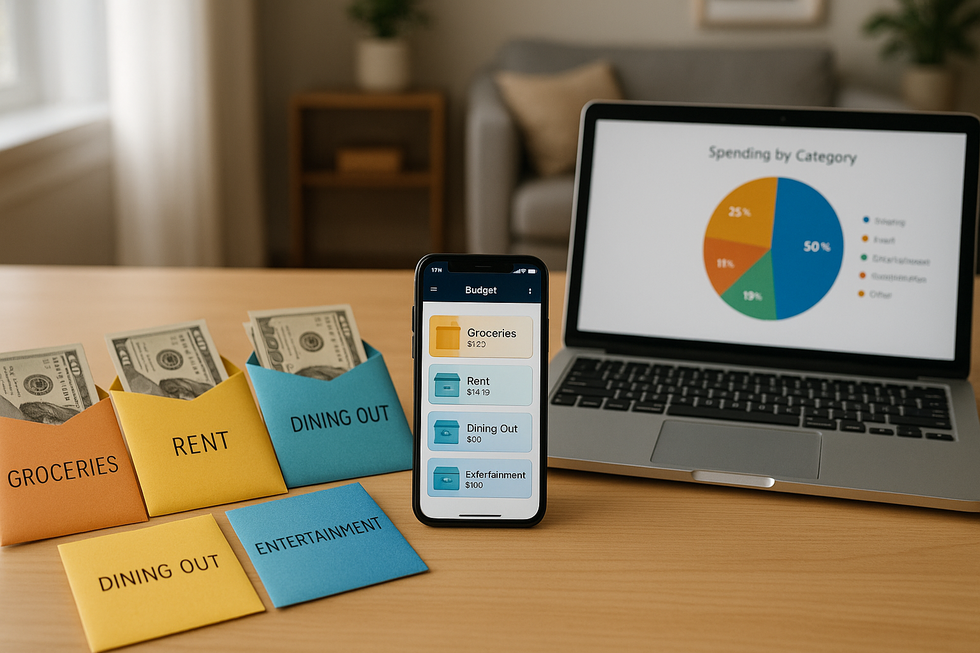
For many, the most pragmatic solution is a combination. Use online banking and direct debits for fixed and predictable expenses (mortgage/rent, utilities, insurance), and apply the physical envelope method with cash for variable and excess-prone spending categories like:
- Groceries and supermarket.
- Restaurants and outings.
- Entertainment and leisure.
- Small personal expenses (“pocket money”).
This approach leverages the discipline of cash where it’s most needed (discretionary spending) while maintaining digital convenience for the rest.
4. Modern “Cash Stuffing”
The resurgence of the method, often under the viral term “cash stuffing” on social media, demonstrates its ongoing appeal, especially among younger generations seeking control amid economic uncertainty. Plastic sleeve folders are often used instead of envelopes, but the principle is identical. This revival underscores the human need for tangibility and visual control in financial management, even as a counterpoint to digital abstraction.
Is It Still Effective? Updated Pros and Cons
Evaluating the method (in its pure or adapted forms) today:
Persistent Advantages 👍
- Built-In Discipline: A clear physical or visual limit remains a powerful barrier against impulsive spending.
- Spending Awareness: Forces a confrontation with how much is really spent in each category.
- Conceptual Simplicity: Easy to understand and implement in its basic form.
- Debt Prevention: By spending only what is assigned, it is difficult to accrue debts (especially with the pure cash method).
- Psychological Control: For many, physically handling money (or its direct digital representations) provides a greater sense of control.
Modern Disadvantages and Considerations 👎
- Partial Incompatibility: The pure physical method clashes with the prevalent digital payment infrastructure.
- Security: Handling large amounts of cash presents risks.
- Inconvenience: Requires regularly withdrawing cash and carrying it. Digital tracking requires discipline to log transactions.
- Less Rewards: Misses out on points, cashback, or other credit card benefits (though this can be a plus if it prevents overspending).
- Inflexible Budgets: Adjusting the budget mid-cycle can be challenging if unexpected expenses arise (though an “emergency” envelope can mitigate this).
Verdict: A Valuable Principle Needing Flexibility
The envelope method, in its essence of budgeting based on allocation and limitation by category, remains an extraordinarily effective tool for taking control of personal finances. The assertion that it “no longer works” in the digital age overlooks its capacity for adaptation.
More than questioning if the *physical* method works for everyone, the relevant question is whether the *principles* underpinning it can be effectively applied today. The answer is a resounding yes ✅. Whether through physical envelopes for certain categories, virtual envelope apps, a multi-account strategy, or a combination thereof, the deliberate act of planning, allocating, and limiting spending by category is fundamental to financial well-being.
The key to success doesn’t lie in doggedly adhering to a specific version of the method, but in understanding its underlying logic and intelligently adapting it to personal financial circumstances and tools. The digital age hasn’t killed the envelope method; it has challenged it to evolve. And in its modernized forms, it continues to offer a clear roadmap to more conscious and controlled financial management 💡💰.
About the Author