Evolution of Urban Wildlife: Surviving and Thriving in Concrete Jungles 🏙️🦊
When city planners sketch out skylines, one imagines they rarely consider foxes, hawks, or raccoons. Yet, amidst the neon glow and ceaseless hum of urban life, a quiet evolution is taking place. Urban wildlife is not just surviving; it’s thriving. Much like weeds that defiantly push through cracks in the pavement, these animals find ways to flourish in habitats far removed from their original wilderness 🌿🐾. But how do these furry and feathered denizens navigate a world dominated by steel and glass?
Natural Adaptation in Unnatural Settings
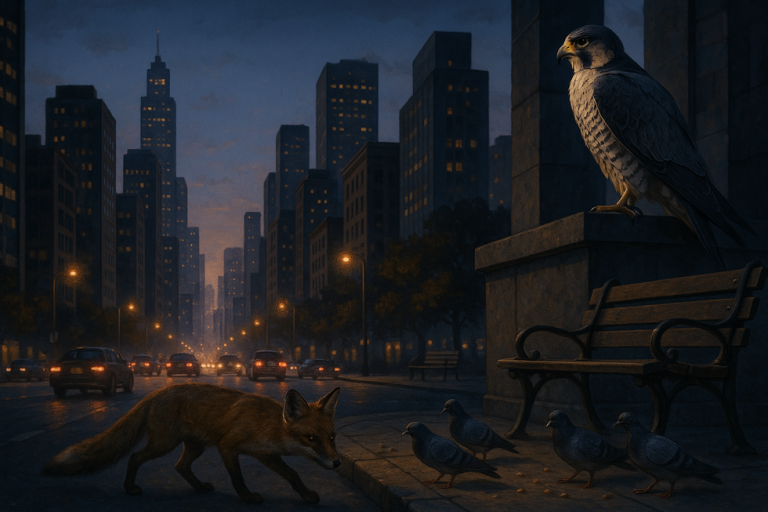
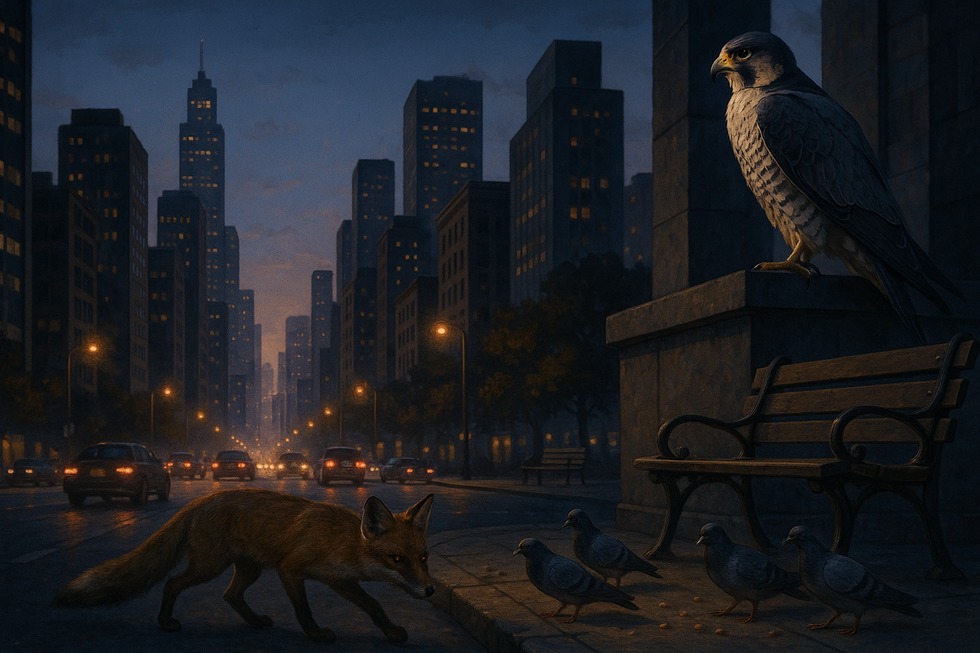
From the cunning coyote dodging traffic to the peregrine falcon nesting atop skyscrapers, these urban critters showcase a resilience that rivals that of their human counterparts. Adapting to city life is no small feat; it’s akin to training for a marathon only to find the course lined with pitfalls and distractions. Yet here they persist, crafting niches in our self-made wilds 🏃♂️🌆.
Contrary to popular belief that urbanization spells doom for these creatures, studies reveal a different narrative. For instance, research from the University of Melbourne found that urban foxes in the city are living longer than their rural counterparts, benefiting from the inconsistencies of human waste and lack of natural predators.
However, what allows them this unlikely ascendancy in urban territories? Is it mere coincidence, or a testament to nature’s indomitable will? Perhaps a tango of both—a dance of survival marked by cunning improvisation and inevitable adaptation.
Survival Strategies: A Masterclass
Consider the humble pigeon, often met with derision as a “city rat with wings.” Nonetheless, these birds exhibit an uncanny ability to thrive, embodying that spirit of taking life’s crumbs and crafting a feast. They, much like professional networkers, have learned to read and react to human behavior, timing their visits to park benches and doorsteps with shrewd precision.
- Resourcefulness: Access to food by scavenging from human refuse and adapting dietary needs.
- Habitat Utilization: Nests in buildings, signposts, and crevices offering safety from natural predators.
- Behavioral Flexibility: Altering circadian rhythms to avoid human activity peaks.
In an ironic twist, these creatures often serve as barometers of urban health, offering clues concerning the ecological state of our cities. If the pigeons coo, all might be well 🐦.
Civic Coexistence or Conflict?
As cities expand ever outward, the lines between human habitats and those of wildlife blur, leading to inevitable clashes. Yet, not all is adversarial. While disputes over garbage bin access and garden raids persist, there is the dawning realization among urbanites that coexistence is possible, even necessary. Might this signify a shift in human awareness—a pest becoming a pause for reflection?
Copious examples abound: conservation initiatives are proving effective in human-animal conflict resolution. Cities like Berlin have implemented “ecological stepping stones” to encourage safe corridors for wildlife, fostering a delicate but promising balance.
A Glimpse into the Future 🔮
As we ponder our symbiotic existence, the question arises: in the urban narrative—a tale of perpetual innovation—are we supporting the wildness? Planters might reclaim rooftops, and environmental corridors carve paths of greenery through gray landscapes. A push toward green infrastructure may just offer a saving grace for both urban wildlife and its human inhabitants.
With an eye toward sustainability, urban landscapes may evolve to not merely accommodate, but actively nurture diverse ecosystems. Coyotes on Main Street? Perhaps just another thread in the city’s rich tapestry of life.
Through this lens, urban wildlife isn’t merely surviving quietly in the shadows but thriving as an integral, enlightening facet of modern city life. Might we learn a lesson from them—fortitude in adaptation, innovation amidst change? In cities that never sleep, could there be an unexpected harmony waiting to be discovered? 🌇🦝
About the Author